Art, Identity & Belonging: Creating Space for Expression and Connection
Updated: May 3
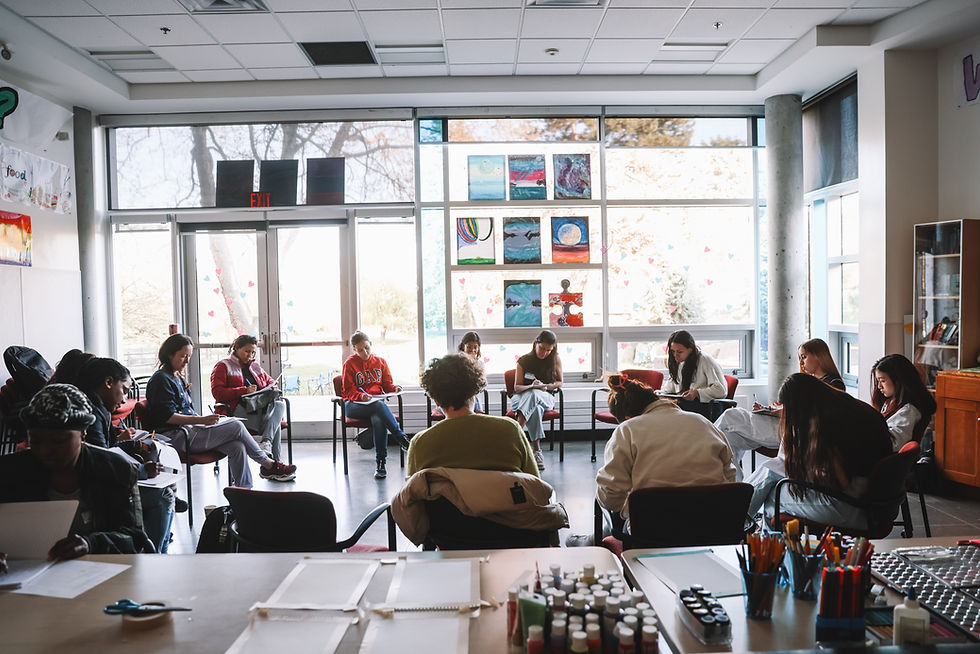
In January 2022, I had the opportunity to work with a group of teens in a community art program focused on identity, belonging, and the complex experiences of migration. This program was more than just a series of workshops; it became a space for reflection, sharing, and growth. Through art, we explored what it means to live between two cultures.
Dual Identities was a five-session community art program designed for youth with lived experience of migration and cultural duality. Each session built on the last, guiding participants from personal identity exploration to abstract emotional expression, from individual reflection to collective storytelling.
The program was grounded in the belief that art is not just a creative skill, it is a tool for processing experience, building resilience and finding community.

Session 1 - Who am I?
We opened with a foundational question: What does it mean to carry two cultures inside you?
Through the Personal Identity Wheel activity, participants mapped their values, interests, languages, cultural connections and personal aspirations; then shared them in small groups. For many, it was the first time they had been invited to articulate who they are in a structured, supported setting.
"I am an adolescent, with a lot of objectives to achieve" — E., 17
E., shared that he feels proud to be part of a large, supportive Latino community, and connects strongly through language, food, and music. His words captured both a sense of rootedness and ambition, a desire to honour where he comes from while imagining his future.
Session 2- The Colour of My Identity
During our second session, participants were invited to reflect on their migration journeys. We began with a guided meditation, asking them to return to the last moment they spent in their country of origin. Who did they say goodbye to? What did it feel like to leave?
Then we moved into an abstract art-making session. Using colors, textures, and movement, they represented these journeys visually.

S., one of the most engaged participants, used her artwork to express her deep connection to family, art, and culture. A passionate anime artist and karate enthusiast, she created work that fused her cultural pride with her personal passions. She also shared with the group: “The skill I’m most proud of is my ability to draw.”
Session 3: Belonging and Transforming
In our third session, we addressed what it feels like to want to belong, especially in a new place. We read from Caroline Dawson’s Là où je me terre, reflecting on the tension between embracing one’s roots and the pressure to fit in.
Participants walked in a room filled with hanging affirmations and were asked to chose the ones they connected with the most. phrases like “I am enough,” or “I deserve to be here” and transformed them into personal artworks. These pieces became symbols of resilience, empowerment, and self-definition.

“My objective is to have more confidence in speaking with new people” — A., 13
A., was one of the youngest participants and also one of the most introspective. Her goal was not artistic, but deeply personal: to become more confident socially. Over time, we saw her start to open up, drawn in by her interest in abstraction.
Her artwork, soft yet expressive, mirrored her personality. And while she may not have spoken as much as others, when she did, it was intentional. Programs like this offer more than just art instruction; they offer growth, trust, and self-awareness.
“Stories of Migration. Stories of Courage. Stories of Belonging.”
Our final sessions were a moment of synthesis and celebration. Participants completed unfinished works, wrote artist statements and recorded short video reflections on their experience. They revisited the themes we had moved through together : (dual) layered identity, memory, values, belonging, and named what had shifted for them.
Many expressed pride in what they had created. Some were surprised by what they had discovered about themselves. Others shared gratitude for a space where they could connect with people who, as one participant put it, "just get it."
Program Impact
Dual Identities showed that structured, culturally responsive arts programming can create meaningful outcomes beyond artistic skill development. Over five sessions, participants demonstrated:
Increased confidence in self-expression and sharing their work
A stronger ability to reflect on their identity and cultural values
Meaningful connections with peers across different backgrounds and experiences

Comments